PIERS MORGAN REIGNITES DEBATE WITH MEGHAN MARKLE “SOHO HOUSE” PHOTOS — AND WHY THE STORY WON’T GO AWAY

PIERS MORGAN REIGNITES DEBATE WITH MEGHAN MARKLE “SOHO HOUSE” PHOTOS — AND WHY THE STORY WON’T GO AWAY

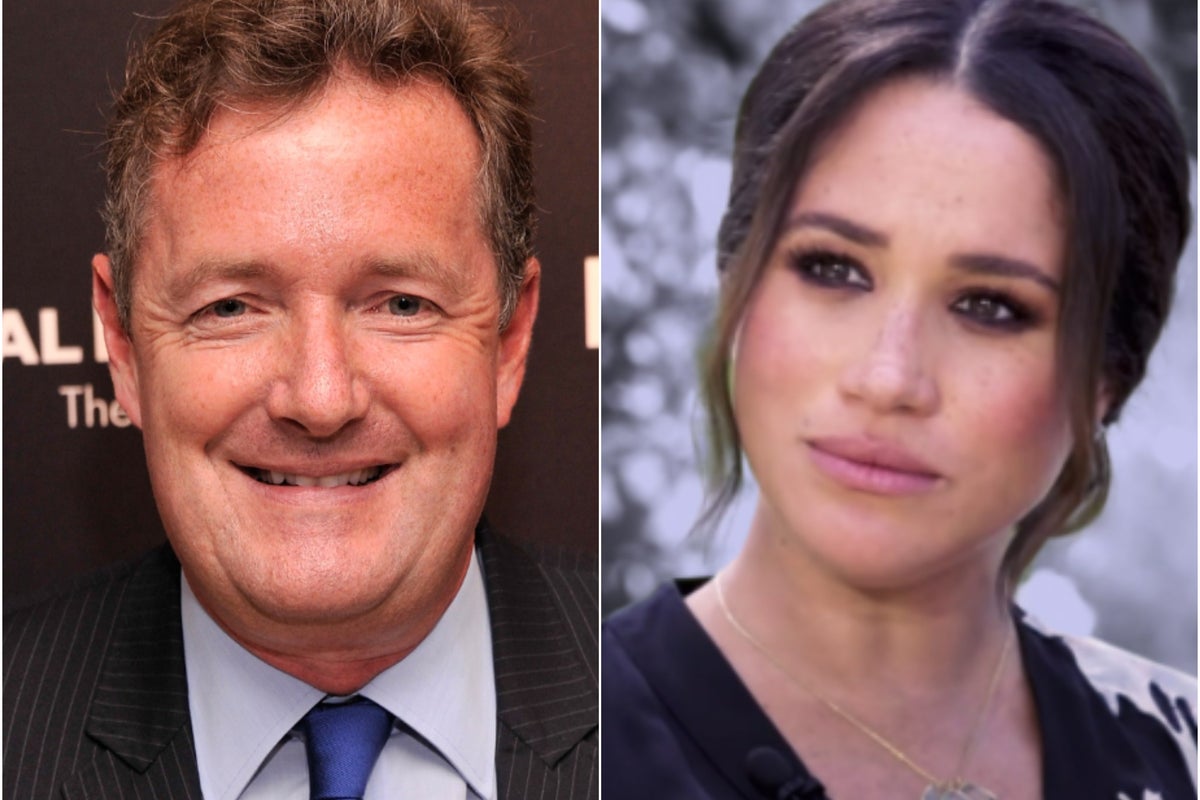
*On-Air Shock: Piers Morgan Unveils Meghan Markle’s Previous Soho House Photos Piers Morgan Is Back in the Headlines, and This Time It’s Because of Meghan Markle’s Prior Photos From Soho House, Which Have Sparked a Flurry of On-Air Astonishment and Constant Internet Discussion. In a Moment That Swiftly Became a Social Media Talking Point, Piers Responds as New Criticism and Resurfaced Photos Rekindle a Well-Known Controversy: Meghan’s Public Persona, Her Pre-Royal Years, and the Reasons Why Some Stories Keep Coming Up. We Go Over What Was Displayed, How the Segment Developed, and Why These Old Photographs of Soho House Are Currently Trending Once More.
Piers Morgan once again found himself at the center of a media storm after addressing resurfaced photos and commentary related to Meghan Markle’s pre-royal years and her connection to Soho House, the private members’ club known for attracting creatives, celebrities, and global elites. The segment, which aired live, immediately sparked intense online discussion and reignited a familiar cultural divide.

What made the moment striking was not the material itself — the images and references have circulated in various forms for years — but Morgan’s on-air reaction. With his signature directness, he questioned why certain aspects of Meghan’s past continue to generate controversy and why, despite time passing, the conversation surrounding her public image remains unresolved.
During the broadcast, Morgan did not present new evidence or claim exclusive revelations. Instead, he framed the discussion around perception, narrative consistency, and public curiosity. That framing alone was enough to send social media into overdrive. Clips from the segment were shared widely within hours, trending across multiple platforms and drawing sharply divided responses.


Supporters of Meghan Markle were quick to criticize the segment, arguing that it unfairly revisited her life before she became part of the royal family. To them, the resurfacing of these photos represents a recurring pattern in which her past is scrutinized in ways rarely applied to others. Many emphasized that Markle was an independent professional — an actress and activist — and that social or professional ties to venues like Soho House were neither unusual nor controversial.
Others, however, defended Morgan’s commentary, saying the interest stems from broader questions about public storytelling. This group argued that the debate is less about the photos themselves and more about the contrast between Meghan’s earlier public life and the image she later occupied as a royal figure. From this perspective, curiosity is driven by narrative tension rather than judgment.
The sudden spike in online searches for “Soho House” following the broadcast highlights how symbols matter in media storytelling. Soho House has long carried an aura of exclusivity and mystery, often associated with behind-the-scenes networking among influential figures. When paired with a polarizing public figure, the name itself becomes a trigger for speculation — even in the absence of new information.

Media analysts point out that this episode reflects a larger phenomenon: how certain individuals become recurring focal points in cultural conversations. Meghan Markle occupies a unique space at the intersection of celebrity, royalty, gender politics, race, and media power. As a result, almost any mention of her name has the potential to reactivate long-standing narratives, regardless of context.
Notably, Markle did not issue a response to the segment. Observers suggest this silence may be intentional. In modern media cycles, responding can often prolong a story rather than resolve it. Choosing not to engage may reflect a strategy of disengagement from debates perceived as repetitive or unproductive.
For Piers Morgan, the moment reinforced his established role as a provocateur who challenges popular narratives and accepts controversy as part of his brand. His critics view this approach as needlessly inflammatory, while his supporters praise it as unapologetically direct. Regardless of opinion, the impact is undeniable: ratings rise, clips spread, and the conversation expands.
What ultimately keeps stories like this alive is not the content itself, but the ecosystem surrounding it. Algorithms reward engagement, controversy fuels discussion, and audiences are drawn to unresolved tensions. In that environment, familiar narratives resurface again and again, reshaped slightly each time but rarely put to rest.
The “Soho House photos” debate is therefore less about the past and more about the present — about how public figures are defined, how stories are retold, and how media attention operates in cycles. It raises enduring questions about privacy, fairness, and whether it is ever possible for a public narrative to truly move on.
As long as Meghan Markle remains a figure of cultural significance, moments like this are likely to recur. Not because new facts emerge, but because the conversation itself has become part of the story — one that continues to evolve with every broadcast, reaction, and click.